Prague: The Ultimate 7-Day Travel Guide
Discover the City of a Hundred Spires: Medieval Magic, Bohemian Beauty, and Czech Culture
Welcome to Prague
Prague is a city that seems to have stepped straight out of a fairy tale, where Gothic spires pierce the sky, baroque facades line cobblestone streets, and the Vltava River winds through a cityscape virtually untouched by modern development. As the capital of the Czech Republic and one of Europe’s most enchanting destinations, Prague offers visitors a perfect blend of rich history, stunning architecture, vibrant culture, and world-famous Czech beer.
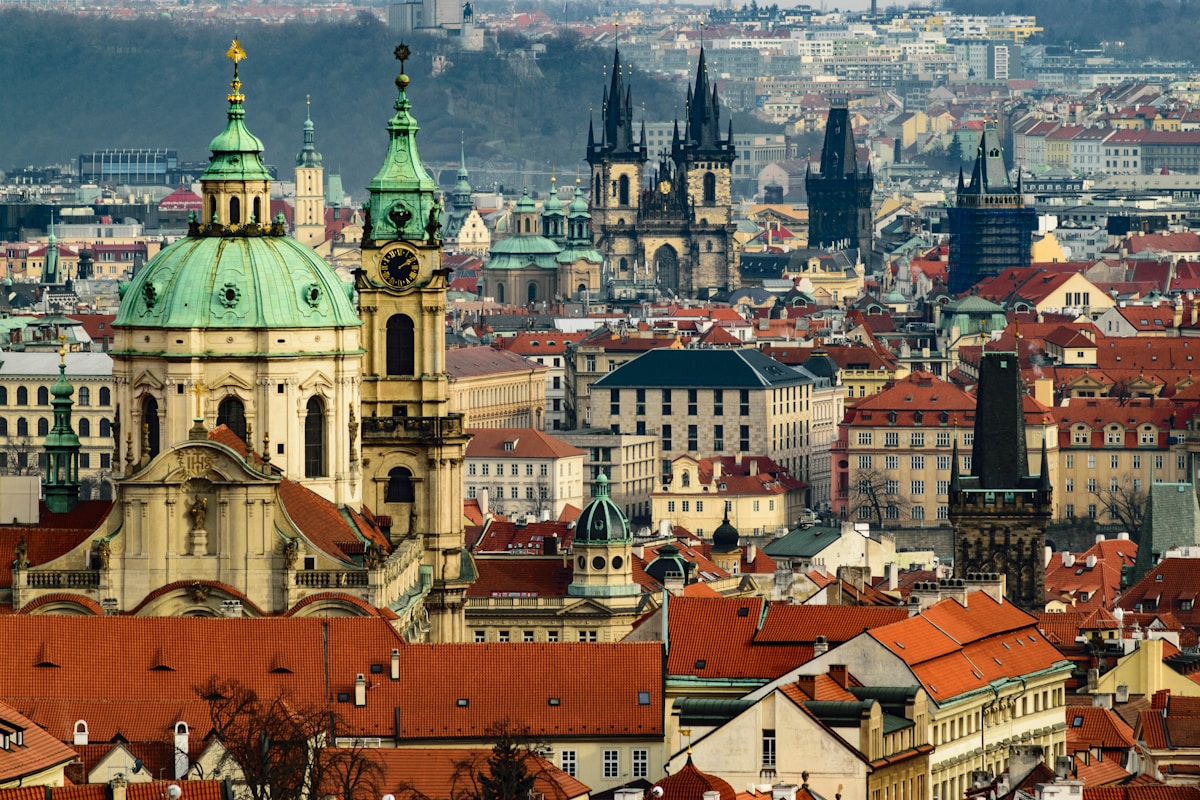
Known as the “City of a Hundred Spires” for its profusion of church towers and architectural landmarks, Prague has survived centuries of tumultuous history to emerge as one of Europe’s most beautiful and best-preserved cities. From the imposing Prague Castle complex overlooking the city to the medieval astronomical clock in Old Town Square, from the romantic Charles Bridge adorned with baroque statues to the colorful buildings of Mala Strana, Prague captivates visitors with its timeless charm and romantic atmosphere that has inspired artists, writers, and travelers for generations.
Unlike many European capitals that were heavily damaged or rebuilt during the 20th century, Prague emerged from both World Wars and communist rule with its historical center remarkably intact, preserving centuries of architectural evolution in a relatively compact area that can be explored largely on foot. This unique preservation means visitors can walk from the medieval Old Town through Renaissance courtyards to baroque churches and Art Nouveau masterpieces, experiencing nearly a millennium of European architectural styles within a few city blocks.
Understanding Prague: The Heart of Bohemia
Prague’s character has been shaped by over a thousand years of history as the capital of the Bohemian Kingdom, the Holy Roman Empire at its peak, and later Czechoslovakia and the independent Czech Republic. The city sits in the heart of Central Europe, built on nine hills along both banks of the Vltava River, creating dramatic viewpoints and varied neighborhoods, each with distinct personalities reflecting different historical periods and purposes.
With a metropolitan population of approximately 2.7 million, Prague maintains a surprisingly intimate feel in its historic center, where the UNESCO World Heritage-listed Old Town preserves its medieval street plan virtually unchanged since the 14th century. The city is remarkably compact and walkable, with most major attractions concentrated within or near the historical core. Prague’s layout is somewhat irregular, particularly in the oldest areas, with winding medieval streets and squares that evolved organically over centuries rather than being planned, creating an atmosphere of discovery around every corner and making it easy to lose yourself in exploration.
The climate is temperate continental, characterized by warm summers averaging 70-80°F (21-27°C) and cold winters that can drop to 25-35°F (-4-2°C), often bringing snow that transforms the city into a winter wonderland straight from a storybook. Spring arrives with blooming gardens and trees, while autumn paints the city’s parks and hillsides in golden and red hues. The city’s position in Central Europe means distinct seasons, each offering unique atmospheric qualities that change how you experience the city’s landmarks and streets.
Prague served as the capital of the Holy Roman Empire under Charles IV in the 14th century, a golden age when the Charles Bridge, St. Vitus Cathedral, and Charles University (Central Europe’s oldest university) were founded. Later periods of Habsburg rule, Bohemian independence movements, Nazi occupation, communist dictatorship, and the peaceful Velvet Revolution have all left their marks on the city’s character, creating layers of history visible in architecture, monuments, and the resilient spirit of Prague’s people.
Day 1: Prague Castle and Mala Strana
Morning: Prague Castle Complex – A Journey Through Czech History
Begin your Prague adventure at Prague Castle (Pražský hrad), one of the largest ancient castle complexes in the world, stretching over 70,000 square meters atop Hradčany hill. This UNESCO World Heritage site has been the seat of Czech rulers, Holy Roman Emperors, and presidents for over a thousand years and dominates the Prague skyline from nearly every vantage point in the city, serving as a constant reminder of the nation’s long and complex history.
Start early—the castle gates open at 6 AM for the grounds, though interior buildings don’t open until 9 AM. Arriving early allows you to enjoy the complex before tour groups arrive, photograph the courtyards and exterior architecture in beautiful morning light, and have a more contemplative experience in the cathedral and other buildings. The standard entry ticket (Circuit B) covers St. Vitus Cathedral, the Old Royal Palace, St. George’s Basilica, and Golden Lane with Daliborka Tower. Allow a minimum of 3-4 hours to explore properly, though castle enthusiasts could easily spend an entire day here.
St. Vitus Cathedral, the castle’s spectacular centerpiece, is a masterpiece of Gothic architecture that took nearly 600 years to complete, finally finishing in 1929 though construction began in 1344 under Charles IV. The soaring interior, with its ribbed vaulted ceiling reaching 33 meters high, creates an awe-inspiring space filled with stunning stained glass windows including remarkable Art Nouveau designs by Alfons Mucha (look for the window in the north aisle depicting St. Cyril and St. Methodius), intricate stone vaulting demonstrating the pinnacle of Gothic craftsmanship, and the tombs of Czech kings, saints, and national heroes including St. Wenceslas, Charles IV, and Rudolf II.
The Chapel of St. Wenceslas, located within the cathedral, is particularly magnificent—its walls adorned with over 1,300 semi-precious stones including jasper, amethyst, and agate, creating a glittering shrine to the Czech patron saint. The chapel contains the tomb of St. Wenceslas and serves as the symbolic heart of Czech statehood. A door in the chapel leads to a chamber that once housed the Czech crown jewels (now displayed elsewhere in the castle), adding to its historical significance.
The Old Royal Palace, adjacent to the cathedral, served as the residence for Bohemian rulers from the 11th to 16th centuries before the court moved to more comfortable quarters. The Vladislav Hall, with its elaborate late Gothic vaulted ceiling designed by Benedikt Rejt and completed in 1502, is one of the largest medieval ceremonial halls in Europe, measuring 62 meters long, 16 meters wide, and 13 meters high. This magnificent space hosted coronation banquets, markets, and even indoor jousting tournaments—the wide Renaissance windows were designed to allow mounted knights to enter directly from the adjacent courtyard. The palace also houses the site where the famous Second Defenestration of Prague occurred in 1618, when Protestant nobles threw two Catholic Imperial governors and their secretary from the window, an event that sparked the Thirty Years’ War which devastated Central Europe.
St. George’s Basilica, the castle’s second church, is Prague’s oldest surviving church building, founded in 920 AD and rebuilt in its current Romanesque form after a fire in 1142. The basilica’s austere Romanesque interior, with its thick walls, rounded arches, and minimal decoration, contrasts sharply with the ornate Gothic St. Vitus Cathedral, allowing visitors to appreciate different architectural periods. The church now functions as a concert hall, taking advantage of its excellent acoustics, and houses tombs of early Přemyslid rulers who preceded the Luxembourg and Habsburg dynasties.
Golden Lane (Zlatá ulička), a charming narrow street lined with tiny, colorful houses built into the castle walls in the 16th century, takes its name from the goldsmiths who supposedly lived here, though the reality was less glamorous—the small dwellings actually housed castle guards, servants, and later various artisans and poor families. Today the houses have been restored and converted into small museums and shops displaying historical crafts, weapons, and period furnishings. House Number 22 famously served as a writing studio for Franz Kafka in 1916-1917, where he worked on short stories during his sister’s residence there. The lane’s fairy-tale appearance, with houses painted in bright blues, pinks, yellows, and greens, makes it one of the most photographed locations in the castle complex.
Afternoon: Mala Strana (Lesser Town) – Baroque Splendor
After the castle, descend through castle gardens or via the Old Castle Steps into Mala Strana (Lesser Town), the baroque district nestled between the castle hill and the Vltava River. This neighborhood feels frozen in the 17th and 18th centuries, when it was rebuilt following a devastating fire in 1541, with elegant palaces housing aristocratic families, ornate churches showcasing Counter-Reformation splendor, and quiet streets that seem little changed since Mozart walked them during his Prague visits in the 1780s.
The centerpiece of Mala Strana is St. Nicholas Church (Kostel svatého Mikuláše), a stunning baroque masterpiece completed in the mid-18th century and considered one of the finest baroque buildings north of the Alps. The church’s interior overwhelms with elaborate frescoes covering over 1,500 square meters of ceiling space, dramatic sculptures by leading baroque artists, intricate stucco work, massive marble columns with golden capitals, and a ceiling fresco by Johann Lukas Kracker depicting scenes from St. Nicholas’s life. The church’s dome and 79-meter bell tower are iconic Prague landmarks visible from numerous viewpoints across the city. During the communist period, the bell tower served as an observation post for the secret police monitoring Western embassies in the neighborhood—a fascinating historical footnote to this religious masterpiece. Classical concerts held here regularly take advantage of the building’s exceptional acoustics and dramatic baroque setting.
Wander through Mala Strana’s picturesque streets, discovering hidden gardens accessible through baroque palace courtyards, aristocratic palaces built for noble families who wanted to be near the royal court, and charming squares with outdoor cafés and restaurants. Malostranské náměstí (Lesser Town Square) serves as the neighborhood’s heart, dominated by St. Nicholas Church and surrounded by historic buildings including the former town hall and baroque plague column. Small streets radiating from the square reveal architectural gems, antique shops, galleries, and intimate restaurants favored by locals.
The John Lennon Wall, located near the French Embassy on a quiet square, has become an unlikely symbol of freedom and peace. After Lennon’s murder in 1980, this ordinary wall became covered with Beatles-inspired graffiti, Lennon portraits, and peace messages created by Czech youth expressing their frustration with the communist regime. Despite repeated whitewashing by authorities, new graffiti always appeared, making it a form of peaceful resistance. Today, visitors from around the world add their own messages, constantly changing the wall’s appearance while maintaining its spirit of peace, love, and freedom.
Cross through an archway near the wall to reach Kampa Island, a quiet oasis separated from Mala Strana by the narrow Devil’s Channel (Čertovka), which once powered several watermills. The island offers peaceful riverside walks along landscaped parks, lovely views back toward the Old Town across the Vltava, outdoor art installations including David Černý’s controversial “Babies” sculptures crawling up the Žižkov TV tower, and charming cafés with terraces overlooking the water. The Kampa Museum displays modern Central European art in a converted mill building. This area provides a welcome respite from crowded tourist areas while remaining steps from major attractions.
Evening: Charles Bridge at Sunset – Prague’s Most Iconic Experience
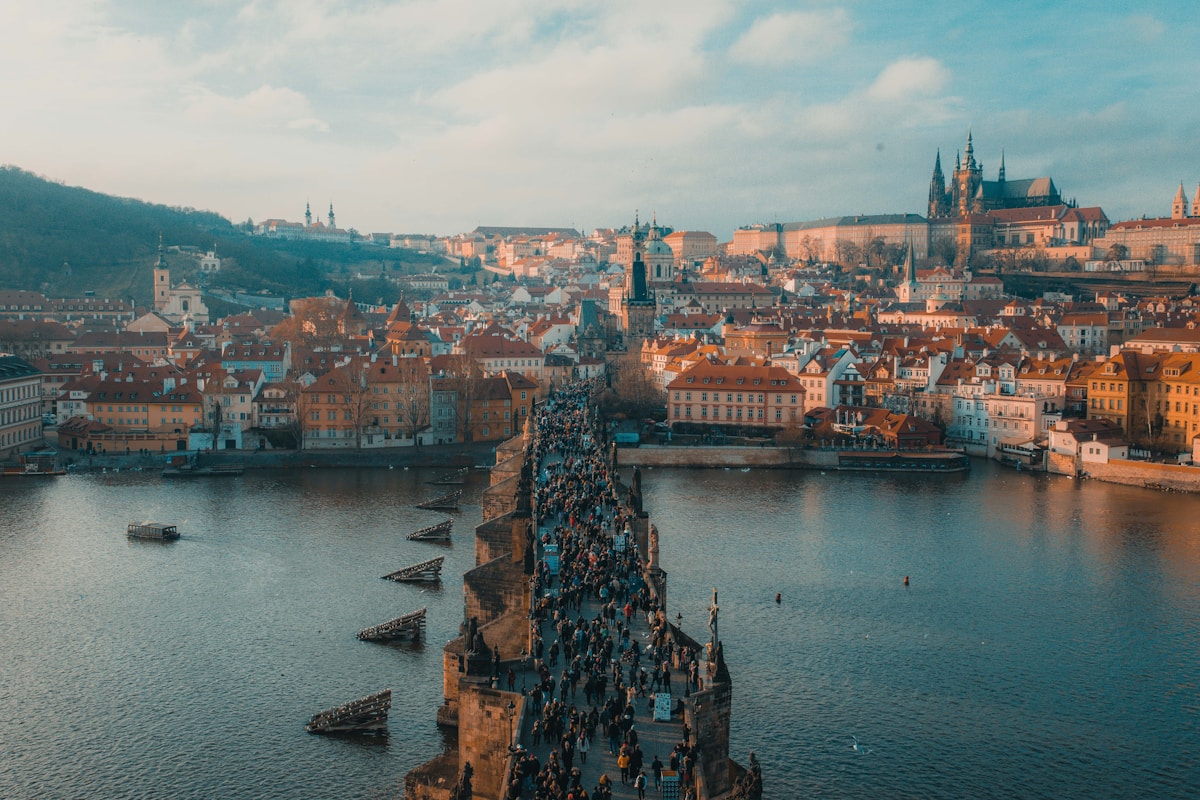
End your day crossing the legendary Charles Bridge (Karlův most), Prague’s most famous landmark and one of the world’s most beautiful medieval bridges. This 14th-century stone bridge, commissioned by Charles IV and completed in the early 15th century, spans 516 meters across the Vltava River, connecting Mala Strana with Old Town. The bridge is adorned with 30 baroque statues of saints added in the 17th and 18th centuries (most are now copies, with originals preserved in museums), creating an open-air sculpture gallery against the backdrop of Prague’s spires and the castle looming above.
Walking the bridge, particularly around sunset when the castle and churches glow golden in the fading light and the river reflects the colorful sky, is a quintessential Prague experience that captures the city’s romantic, timeless quality. The bridge connects not just two banks of a river but different eras of history, with each stone having witnessed centuries of royal coronation processions, armies crossing for battle, severe floods that nearly destroyed it, and the everyday life of generations of Prague residents.
According to legend, Charles IV consulted astrologers to determine the most auspicious time to lay the bridge’s foundation stone—the precise moment chosen was 5:31 AM on July 9, 1357, creating the numerical palindrome 1-3-5-7-9-7-5-3-1, believed to give the bridge magical strength. Whether magic or superior engineering, the bridge has survived numerous floods and wars that destroyed other Vltava bridges, standing as Prague’s only river crossing for over 400 years until the 19th century.
The most famous statue depicts St. John of Nepomuk, who was martyred by being thrown from this bridge into the river in 1393 after refusing to reveal the queen’s confession to the king. Tradition holds that touching the brass plaque showing his drowning brings good luck and ensures your return to Prague—you’ll recognize it by the polish worn smooth by millions of hands.
During the day, the bridge buzzes with musicians playing classical pieces and folk songs, artists selling paintings and sketches, vendors offering souvenirs, and street performers entertaining crowds. While crowded, this activity creates a festive atmosphere connecting today’s Prague with its historical role as a busy trade route and gathering place. For a more contemplative experience, visit early morning (around 6-7 AM) or late evening when crowds thin and you can walk the bridge in relative solitude, appreciating its architecture and atmosphere without jostling through throngs.
For your first dinner in Prague, choose a traditional Czech restaurant in Mala Strana, trying classics like svíčková na smetaně (beef sirloin in rich cream sauce with cranberries and bread dumplings, often considered the Czech national dish), guláš (paprika-spiced beef stew different from Hungarian goulash), vepřo-knedlo-zelo (roast pork with dumplings and sauerkraut), or smažený sýr (fried cheese, a beloved Czech comfort food), all accompanied by world-class Czech beer. Czech cuisine emphasizes hearty, filling dishes that sustained people through cold winters and hard agricultural work, creating flavors that may seem heavy by modern standards but provide authentic taste of local culinary traditions.
💡 Insider Tips for Day 1:
Book castle tickets online in advance through the official Prague Castle website to skip ticket queues, which can exceed 30 minutes during peak season. The castle is most crowded 10 AM-3 PM; early morning or late afternoon visits offer better experiences. Photography is prohibited inside St. Vitus Cathedral but allowed in courtyards and other buildings. Wear comfortable walking shoes—Mala Strana’s cobblestone streets and castle hills involve significant uphill walking. Many closes have uneven steps and surfaces, so watch your footing carefully.
Day 2: Old Town and Jewish Quarter
Morning: Old Town Square and Astronomical Clock – Medieval Marvels
Old Town Square (Staroměstské náměstí) has served as Prague’s main public space since the 10th century, functioning as a marketplace, execution site, political forum, and gathering place for over a millennium. This magnificent square, surrounded by architectural gems spanning Gothic, Renaissance, Baroque, and Rococo styles, creates one of Europe’s most beautiful urban spaces where history seems to come alive with every glance.
The square is dominated by the Church of Our Lady before Týn, whose distinctive twin Gothic spires (80 meters tall with multiple smaller spires) have symbolized Prague since the 14th century. The church’s dark, somewhat foreboding exterior conceals a beautiful Gothic and baroque interior featuring the tomb of Tycho Brahe, the famous Danish astronomer who worked in Prague under Emperor Rudolf II. The church’s spires, visible from countless viewpoints across Prague, appear on postcards, paintings, and photographs as symbols of the city itself.
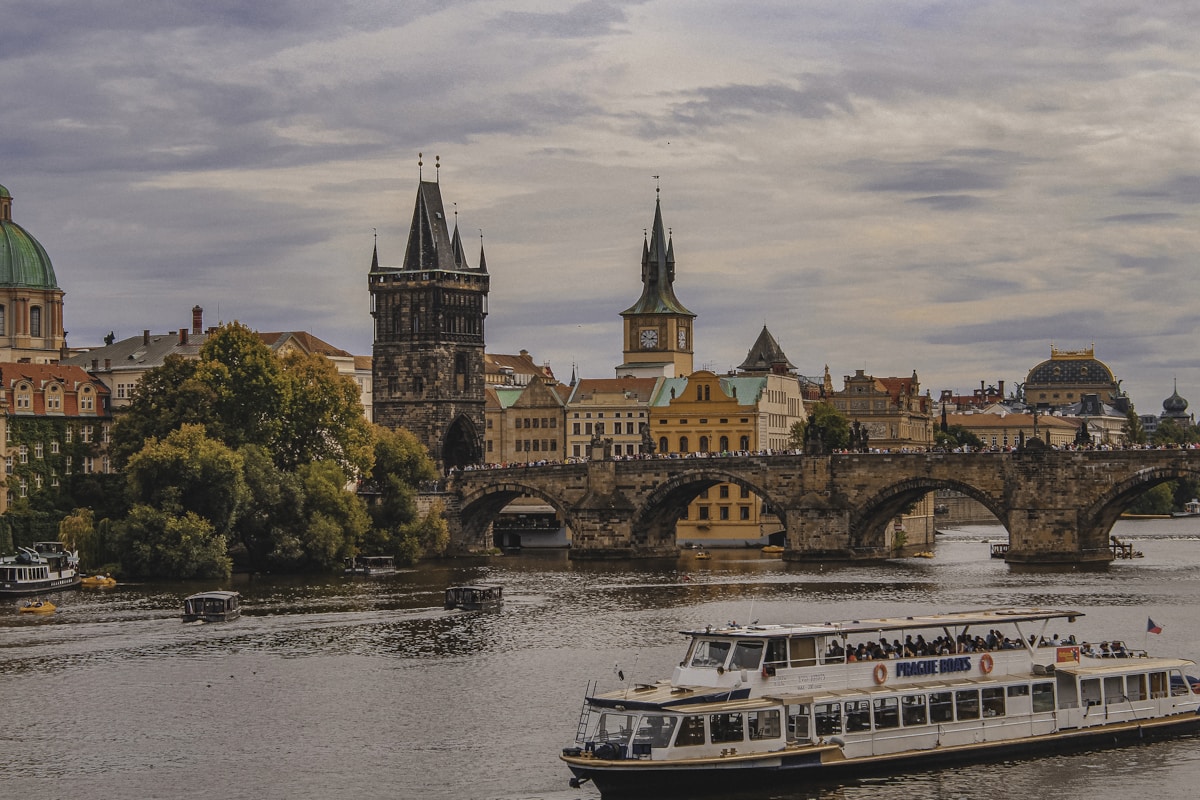
The square’s main attraction is the Prague Astronomical Clock (Pražský orloj), mounted on the Old Town Hall tower and dating from 1410, making it the world’s oldest functioning astronomical clock still in its original location. Every hour from 9 AM to 11 PM, crowds gather in anticipation to watch the clock’s mechanical show as the Twelve Apostles appear in small windows above the clock face, symbolic figures including Death (a skeleton) pull a bell rope and turn an hourglass, and a golden rooster crows to end the performance. While brief (about 45 seconds), this tradition has drawn crowds for over 600 years.
The clock itself is a masterpiece of medieval engineering and artistry, displaying not just time but astronomical details including the sun’s position in the zodiac, moon phases, positions of sun and moon in relation to Earth, and Old Czech time (which measured daylight hours from sunrise to sunset, varying with seasons). The lower dial shows twelve medallions representing months, painted in the 19th century by Czech artist Josef Mánes, depicting traditional activities for each month in rural Bohemian life.
Climb the Old Town Hall tower (accessible via elevator or stairs) for spectacular 360-degree views over Prague’s terra-cotta rooftops, Gothic spires, and baroque domes. From this vantage point, you can appreciate how remarkably preserved the Old Town’s medieval street plan remains, with winding alleys radiating from the square in patterns established centuries ago. The tower also provides excellent views of the clock mechanism from above and the square below, where you can watch crowds gather for the hourly show.
The Old Town Hall itself, established in 1338, suffered severe damage when Nazi forces destroyed its east wing in the final days of World War II in May 1945. Rather than rebuild, authorities left the space open, creating an unusual gap in the square’s otherwise continuous building facades—a deliberate memorial to the war’s destruction and the resilience of the Czech people.
Explore the square’s other architectural gems, including the baroque St. Nicholas Church (different from the Mala Strana church with the same name), pastel-colored buildings with ornate facades and historical significance, and the Kinsky Palace housing the National Gallery’s Asian art collection. Street performers, horse-drawn carriages, and outdoor cafés create a lively atmosphere, though be aware that restaurants directly on the square tend to be overpriced and touristy—walk a few blocks into side streets for better value and often superior food quality.
Afternoon: Jewish Quarter (Josefov) – A Testament to Survival
Just steps from Old Town Square lies Josefov, Prague’s historic Jewish Quarter, which preserves one of Europe’s best-conserved Jewish heritage sites despite the Holocaust’s devastation of Czech Jewish communities. This compact neighborhood contains several centuries-old synagogues, the remarkable Old Jewish Cemetery, and the Jewish Museum, creating a poignant memorial to the vibrant Jewish culture that thrived here for nearly a millennium.
Prague’s Jewish community dates to the 10th century, making it one of Europe’s oldest. The ghetto was established in the 12th century, forcing Jews into a walled quarter where they faced restrictions but also developed a rich cultural and intellectual tradition. Famous residents included Rabbi Loew, legendary creator of the Golem folk tale; Franz Kafka, though he lived just outside the ghetto boundaries; and numerous scholars, merchants, and craftspeople who contributed significantly to Prague’s cultural and economic life.
The Old Jewish Cemetery (Starý židovský hřbitov), used from the early 15th century to 1787, is extraordinarily atmospheric and unique—because Jewish religious law prohibits disturbing graves and space within the ghetto was severely limited, bodies were buried in layers, with new soil added and gravestones moved or placed atop older ones. The result is over 12,000 visible gravestones (many tilting at various angles from ground shifts over centuries) representing an estimated 100,000 burials in 12 layers, creating a dense forest of tombstones that evokes both the vibrancy of past Jewish life and the constraints they faced.
The cemetery’s most visited grave belongs to Rabbi Jehuda Löw ben Bezalel (died 1609), the legendary Maharal of Prague credited in folklore with creating the Golem, a clay figure brought to life to protect the Jewish community from persecution. Visitors leave small stones on his grave following Jewish tradition, and many leave notes with wishes or prayers, hoping for the rabbi’s intercession even centuries after his death. The Golem legend has inspired countless literary works, films, and artistic interpretations, becoming one of Prague’s most famous folk tales.
A comprehensive ticket (available at any synagogue) provides access to all Josefov sites. The Spanish Synagogue, built in 1868, stuns visitors with its Moorish interior featuring intricate geometric patterns, gilded decoration, and beautiful stained glass, creating one of Prague’s most photographed interiors. Despite its Islamic-inspired design, this was and remains a Jewish house of worship, demonstrating 19th-century fascination with exotic styles and the Jewish community’s desire to build something spectacular after centuries of restrictions.
The Pinkas Synagogue, adjacent to the cemetery, serves as a memorial to Czech Holocaust victims. Its walls are inscribed with the names of 77,297 Czech Jews murdered by Nazis, listed with their names, dates of birth, and dates of disappearance or death—a overwhelming testament to the systematic destruction of a community that had enriched Czech culture for nearly a thousand years. The second floor displays drawings created by children imprisoned in Terezín concentration camp, heartbreaking works showing remarkable artistic talent and glimpses of hope amid unimaginable suffering.
The Old-New Synagogue (Staronová synagóga), completed around 1270, stands as Europe’s oldest active synagogue and one of Prague’s most significant Gothic buildings. The name derives from confusion in Yiddish and Czech—originally “New Synagogue,” it became “Old-New” as newer synagogues were built. The building’s early Gothic architecture, with thick walls, ribbed vaulting, and minimal windows, creates a fortress-like appearance. According to legend, stones from Jerusalem’s destroyed temple were incorporated into its construction, and the Golem’s remains rest in its attic (which is off-limits to visitors). The synagogue has held services continuously for over 700 years except during Nazi occupation, making it a remarkable symbol of Jewish continuity and survival.
The Klaus Synagogue and Ceremonial Hall house exhibitions on Jewish customs, traditions, and daily life, explaining religious practices, life cycle events, and the role of synagogues in Jewish communities. These displays help visitors understand the rich cultural and religious tradition that flourished in Prague’s Jewish community before the Holocaust destroyed it.
Evening: Pařížská Street and Dinner
Josefov was dramatically rebuilt in the late 19th and early 20th centuries, with slums cleared and replaced by elegant Art Nouveau and neo-baroque buildings. Pařížská Street, Prague’s most elegant boulevard, exemplifies this transformation, lined with beautiful Art Nouveau apartments with elaborate facades, wrought-iron balconies, and ornate decorative elements. Today these buildings house luxury boutiques (Hermès, Prada, Gucci, Louis Vuitton), upscale galleries, and fashionable restaurants, creating Prague’s high-end shopping district.
Walk Pařížská from Old Town Square to the Vltava River, admiring the architecture and people-watching—this street attracts wealthy Russians, fashion-conscious Czechs, and tourists window-shopping at luxury stores. Several excellent cafés with Art Nouveau interiors offer coffee and pastries in elegant surroundings.
For dinner, explore Old Town’s many restaurants beyond the main square. Dlouhá and Rybná streets offer diverse options from traditional Czech pubs serving hearty, affordable meals to modern restaurants offering contemporary Czech cuisine with international influences, emphasizing local ingredients and modern presentations of traditional recipes.
💡 Insider Tips for Day 2:
The Astronomical Clock’s hourly show attracts huge crowds; position yourself early or watch from Old Town Hall tower above the crowds. Josefov sites require separate tickets or a combination ticket covering all synagogues and cemetery—purchase the combination ticket for best value. The Old-New Synagogue requires an additional ticket. Photography is prohibited inside synagogues and the cemetery. Josefov is most crowded midday; early morning or late afternoon visits provide more contemplative experiences. Remember that all Jewish sites close early Friday afternoons and remain closed Saturdays for Sabbath observance, as well as Jewish holidays.
Continue reading for Days 3-7 covering New Town, Wenceslas Square, Vyšehrad, day trips to Kutná Hora, Petřín Hill, Czech beer culture, Karlštejn Castle, and modern Prague…
Practical Information for Prague Visitors
🚇 Getting Around Prague
Public Transport: Prague’s efficient public transport system includes metro (3 lines: green A, yellow B, red C), trams (26 day routes, 9 night routes), and buses, all using a unified ticketing system. Purchase tickets from yellow machines at metro stations, tobacco shops (tabák/trafika), or via the PID Lítačka mobile app. Validate tickets in yellow machines before boarding or upon entering metro stations—inspectors frequently check tickets and fine dodgers on the spot. A 90-minute ticket (40 Kč) allows unlimited transfers; 24-hour (120 Kč) and 72-hour (330 Kč) passes offer good value for tourists.
Walking: Prague’s historic center is compact and best explored on foot—most major attractions lie within a 2-kilometer radius of Old Town Square. Comfortable shoes are essential as streets are often cobbled, hilly, and uneven. Download offline maps as street names can be confusing and GPS helps navigate winding medieval streets.
Taxis and Ride-Sharing: Taxi scams targeting tourists remain common. Use only reputable companies like AAA Taxi (14014) or hail via Uber or Bolt apps, which show fixed prices upfront. Legitimate taxis display rates on doors and use meters. Avoid taxis soliciting customers at tourist sites or train stations—these almost always overcharge dramatically.
💷 Money and Costs
Czech Republic uses Czech Crowns (CZK/Kč) despite EU membership. While many establishments accept euros, exchange rates are usually poor and you’ll receive change in crowns anyway. ATMs (bankomat) offer best exchange rates—withdraw crowns directly rather than exchanging currency. Avoid tourist-area exchange offices advertising “0% commission”—they use terrible rates that result in significant losses. Major credit cards are widely accepted in restaurants, hotels, and shops, though small establishments, markets, and some public transport ticket machines require cash.
Prague remains affordable compared to Western European capitals, though prices have risen significantly in recent years. Budget travelers staying in hostels, eating at pubs and casual restaurants, using public transport, and visiting free attractions can manage on €40-60 daily. Mid-range travelers staying in hotels, dining at nicer restaurants, taking some taxis, and visiting paid attractions should budget €80-120 daily. Luxury travelers can easily spend €150+ daily on high-end hotels, fine dining, and upscale experiences.
Beer is famously cheap—a half-liter often costs less than bottled water, typically 40-60 Kč (€1.60-2.40) in pubs, more in tourist areas. Restaurant meals range from 150-300 Kč (€6-12) for casual dining to 400-800 Kč (€16-32) for upscale establishments.
🍺 Czech Food and Drink Culture
Czech cuisine emphasizes hearty, meat-focused dishes reflecting agricultural traditions and cold climate. Must-try dishes include:
- Svíčková na smetaně: Tender beef sirloin in rich cream sauce with cranberries, bread dumplings
- Guláš: Paprika-spiced beef stew (different from Hungarian goulash), served with dumplings
- Vepřo-knedlo-zelo: Roast pork with dumplings and sauerkraut, archetypal Czech meal
- Smažený řízek: Breaded fried pork or chicken schnitzel
- Smažený sýr: Fried cheese (usually Edam), beloved comfort food
- Kulajda: Creamy mushroom soup with dill and poached egg
- Trdelník: Sweet pastry rolled on stick, grilled, coated in cinnamon sugar (tourist favorite though not traditional Czech)
Czech beer (pivo) is legendary—Czechs have the world’s highest beer consumption per capita, and Czech brewing traditions date back centuries. Pilsner Urquell, invented in Plzeň in 1842, created the pilsner style now brewed worldwide. Other excellent Czech beers include Budvar (original Budweiser, unrelated to American beer), Kozel, Staropramen, and numerous craft breweries.
Beer is served by degrees (°) measuring original gravity, not alcohol content. 10° beer (~4% ABV) is standard; 12° (~5% ABV) is premium. Order “pivo” and you’ll receive 0.5L (půllitr); specify “malé pivo” (0.3L) or “velké pivo” (1L) if desired. Waiters mark your beer mat to track consumption; when finished, place a coaster on your glass to prevent unwanted refills. Wait for others to be served before toasting “Na zdraví!” (nah ZDRAH-vee, “to health!”) while making eye contact—breaking eye contact during toasts supposedly brings seven years bad luck or bad sex, depending on the version!
Tipping: Add 10% for good service in restaurants or round up bills. Saying “to je v pořádku” (that’s fine) when paying tells servers to keep change. Service charges are rarely added automatically—check bills to avoid double-tipping.
🕐 Best Time to Visit Prague
Late April through May and September through early October offer ideal conditions: pleasant temperatures (15-20°C/60-70°F), fewer crowds than summer, lower prices than peak season, and beautiful spring blossoms or autumn colors. Summer (June-August) brings warmest weather but peak tourist crowds, higher prices, and occasional intense heat. The city can feel overwhelmingly crowded, particularly in July-August when European summer vacations coincide.
Winter (December-February) creates magical atmosphere, especially during Christmas markets (late November-early January), though temperatures hover around freezing and daylight hours are short (8:30 AM-4:30 PM in December). Snow transforms Prague into a fairytale but bring warm clothes and waterproof boots. Winter brings significantly fewer tourists and lower prices, making it appealing for budget travelers who don’t mind cold.
Avoid Easter and Christmas holidays unless specifically interested in holiday markets, as accommodation prices spike and major attractions become extremely crowded.
⚠️ Common Mistakes and Scams to Avoid
Prague has a reputation for tourist scams—stay alert to avoid common tricks:
- Currency exchange offices: Those advertising “0% commission” use terrible exchange rates. Use ATMs instead or exchange minimal amounts at your hotel.
- Taxi scams: Drivers approach tourists at stations offering rides, then overcharge dramatically. Use Uber/Bolt or call AAA Taxi (14014).
- Restaurant scams: Unrequested items (bread, nuts, appetizers) added to bills. Check menus for prices, confirm orders, review bills carefully before paying.
- ATM scams: Some tourist-area ATMs offer “dynamic currency conversion”—always decline and choose to be charged in CZK for best rates.
- Pickpockets: Work crowded tourist areas, trams, and metro. Keep valuables secure, bags zipped and in front, wallets in front pockets.
- Strip club scams: Aggressive promoters lure tourists with free entry/drinks, then present bills for thousands of euros under threat. Simply avoid these establishments.
Most Czechs are honest and helpful, but tourist areas attract scammers. Use common sense, research prices beforehand, and don’t hesitate to question unexpected charges.
Final Thoughts on Prague
Prague is a city that exceeds even high expectations, delivering medieval atmosphere, architectural beauty, and cultural richness that few European cities can match. Its remarkable preservation means walking the same streets and crossing the same bridge that medieval merchants, Renaissance scholars, Baroque artists, and generations of Czechs have traversed, creating a tangible connection to European history spanning nearly a millennium.
Seven days allows thorough exploration of Prague’s highlights plus day trips to surrounding castles and towns, though many visitors find themselves planning return trips before they’ve even departed, drawn back by discoveries they didn’t have time for, favorite pubs and cafés they want to revisit, and the magnetic pull of this enchanting city. As Czech writer Milan Kundera eloquently stated, “Prague is a city without a parallel. You can spend a lifetime there and never grow tired of the views, the architecture, the history in its stones.”
Whether you’re drawn by Gothic spires reaching toward heaven, baroque splendor showcasing Counter-Reformation artistry, Art Nouveau elegance demonstrating early 20th-century optimism, world-class beer perfected over centuries, classical music performed where Mozart premiered his works, or simply the romance of wandering medieval streets where history seems to live in every stone, Prague delivers experiences and atmosphere that remain with you long after you’ve returned home. This is a city that doesn’t just preserve history—it lives it, breathes it, and invites you to become part of its ongoing story.